Getting Started with Strength Activity: Questions to Consider
What counts, how hard it should feel, whether you need equipment and when to ask for advice: the questions worth answering before you begin.

On this page
Key points
- Strength activity is anything that makes muscles work harder than usual, including everyday tasks.
- WHO, UK and US guidance for adults suggests it on two or more days a week; any amount is better than none.
- The NHS describes the right effort as needing a short rest before repeating the movement.
- Start gradually and build up over several weeks.
Strength activity is a part of the physical activity guidelines that is easy to overlook and easy to misunderstand. It does not have to mean a weights room. It means asking your muscles to work harder than they usually do, regularly enough that they adapt.
This article is organised as the questions people tend to have before they begin. It will not hand you a programme, because the right starting point depends on your body, your history and what you have access to. It should help you work out your own.
What actually counts as strength activity?
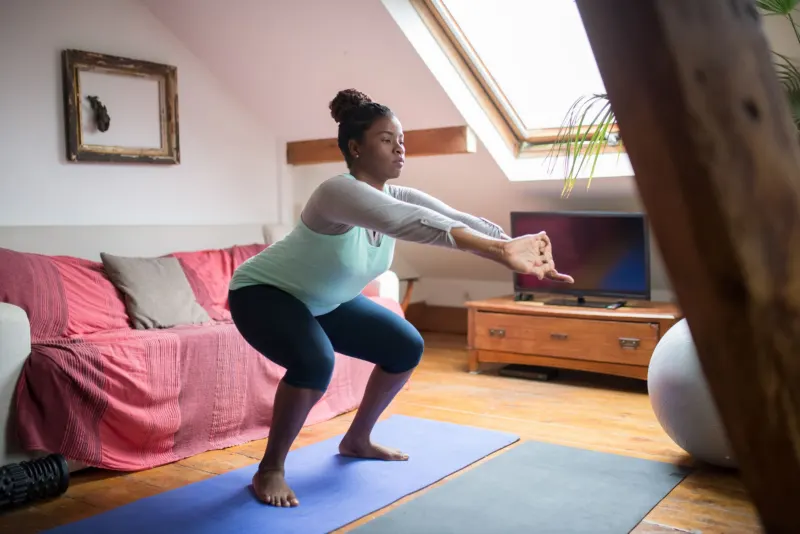
The NHS defines a strength exercise as any activity that makes your muscles work harder than usual, using either your own body weight or some form of resistance. Its list is wider than most people expect: lifting weights and using resistance bands, but also heavy gardening such as digging, climbing stairs, hill walking, cycling, dance, yoga, and movements like push-ups and squats.
The UK Chief Medical Officers’ guidelines add everyday tasks to the list, including stair climbing, wheeling a wheelchair, and lifting and carrying children. The Chartered Society of Physiotherapy, the UK professional body for physiotherapists, makes the same point more bluntly: you do not need to lift huge weights, and carrying shopping or digging the garden can build strength.
How much do the guidelines suggest?
The World Health Organization recommends that adults do muscle-strengthening activity involving the major muscle groups on two or more days a week. UK and US guidance for adults says the same. The NHS names those muscle groups as legs, hips, back, abdomen, chest, shoulders and arms.
This is guidance for adults in general, and it sits alongside the aerobic recommendation rather than inside it: the NHS notes that time spent on strength exercises does not count towards the 150 minutes of moderate activity. The UK guidelines also say plainly that any strengthening activity is better than none, so one day a week is a real start, not a failure to reach two.
How hard should it feel?
No source gives a weight in kilograms that suits everyone, and none could. What the NHS offers instead is a description of effort: a strengthening activity should work your muscles to the point where you need a short rest before repeating it. With a weight, that might mean putting it down after a number of lifts. With a bag of shopping, it might mean changing hands.
Two terms come up in most instructions. A repetition is one complete movement, such as one lift or one sit-to-stand from a chair. A set is a group of repetitions done without a break. The numbers attached to those words in any plan are a starting suggestion to adjust, not a test to pass.
Do I need equipment or a gym?
No. The NHS publishes a set of home strength exercises that need only a stable chair without wheels, a wall and, for one arm exercise, light weights for which it says filled water bottles will do. A gym offers more variety and, often, staff who can show you how machines work. It is one route, not the only one. If space is the obstacle, see our piece on making space for movement in a small home.
How do I begin without overdoing it?
The NHS advice is to start gradually and build up over several weeks. The Chartered Society of Physiotherapy says much the same: start slowly, build up, and find something you enjoy so that you keep going. It adds that it is fine to ache, but that if pain persists you should ease back and go more slowly.
In practice, starting gradually can mean:
- choosing two or three movements, not ten;
- doing fewer repetitions than you think you can on the first day and seeing how you feel the next morning;
- moving slowly and with control, which the NHS emphasises in its home exercises.
The Society also points out that bodies adapt quickly, so something that was a challenge in the first month may stop being one. Progress then means a little more: an extra repetition, a slightly heavier bag, a slower movement.
Should I check with someone first?
The sources do not treat gentle strength activity as something to be afraid of. The NHS describes its home strength exercises as gentle and tells readers not to worry if they have not done much for a while. The UK Chief Medical Officers’ guidelines describe the risk of serious harm from physical activity as very low and say the benefits outweigh the risks.
The sources do name situations where a conversation first is sensible. US guidance from the Centers for Disease Control and Prevention suggests that people with a long-term condition, such as heart disease, arthritis or diabetes, ask their doctor which types and amounts of activity suit them. The UK guidelines note that for frail older adults it may be more appropriate for new exercises to be supervised at first by a trained professional. For pregnancy and the months after birth, the same guidelines say activity choices should reflect what a woman was doing beforehand and should include strength training; our piece on adapting activity to your circumstances has more.
Writing down what you already do in a normal week helps this conversation; our guide to preparing for a medical appointment shows one way to organise it.
Why bother, if I already walk?
Walking and strength activity do different jobs. According to the NHS, muscle-strengthening activity helps people keep up with everyday tasks, slows the loss of bone and muscle that comes with age, and can reduce the chance of falling. Those are reasons that apply at 30 as well as at 70, though they tend to feel more pressing later on.
Some activities cover both. The NHS notes that some aerobic activities, when done at a vigorous intensity, also strengthen muscles; its examples include circuit training, dancing, martial arts and several team sports. If one of those is what you enjoy, you may already be doing more than you thought. Our article on finding movement you enjoy can help you look for one.
Sources
- NHS (UK) How to improve your strength and flexibility
- UK Department of Health and Social Care (UK) UK Chief Medical Officers' physical activity guidelines
- World Health Organization (International) Physical activity (Be Healthy initiative page)
- Chartered Society of Physiotherapy (UK) Staying strong as you get older
- NHS (UK) Strength exercises
- Centers for Disease Control and Prevention (US) Adding Physical Activity as an Adult
How this guide was prepared
Written by Meetis Editorial with AI assistance, using the sources listed above, and checked against them before publication. It has not been reviewed by a doctor or other health professional. It is general information, not personal medical advice — for questions about your own health, speak to a qualified professional.