Making Space for Movement in a Small Home
A four-part worksheet: audit the spots you have, match activities to them, solve the practical problems and give it a time.
On this page
A studio flat, a shared house or a room full of other people’s belongings can make the idea of exercising at home feel absurd. There is no spare room to turn into a gym and often no clear floor at all. But most home-based activity needs far less space than the pictures suggest, and the space it does need is usually there once you look for it properly.
This piece is a worksheet. Work through it once with a pen, and you will end up with a short, realistic list of what you can do where you live.
How much room do you really need?
Less than you might think. The NHS publishes sets of gentle strength and sitting exercises designed for the home. The equipment list for them is short: a solid, stable chair without wheels, in which you can sit with your feet flat on the floor and knees at a right angle; a clear stretch of wall an arm’s length away for wall press-ups; and, for one arm exercise, light weights, for which it says filled water bottles will do. NHS Better Health describes its home workouts as needing no equipment, only some cleared space.
In floor terms, that is roughly the space you take up standing with your arms out, or the space a dining chair occupies plus a step in front of it.
Part 1: Audit the spots you already have
Walk through your home and look at it as a set of surfaces and gaps. The table lists the usual candidates. Tick the ones you have and note what needs checking.
| Spot | What can happen there | Check first |
|---|---|---|
| A stable chair | Seated movements; standing up and sitting down | No wheels, does not slide, feet reach the floor |
| A clear bit of wall | Wall press-ups; a hand on the wall for balance | Nothing hanging at shoulder height; floor not slippery |
| Kitchen worktop | Something steady to hold for heel raises or leg lifts | Fixed and solid; floor dry |
| The space beside the bed | Standing movements; stretching | Room to step sideways without hitting furniture |
| Hallway | Walking lengths; marching on the spot | Shoes, bags and cables moved |
| Stairs, if you have them | Stair climbing as part of the day | Handrail; clear treads; good light |
| Floor the size of a towel | Floor-based movements, if getting down and up suits you | Something soft underneath; space to get up again |
The checks matter more than the spots. Moving the laundry basket and the phone charger takes thirty seconds and is the difference between a usable space and a trip hazard. The NHS advice on chairs is specific for a reason: one with wheels or one that slides is not a safe base. It also suggests avoiding chairs with arms for seated exercises, because they restrict movement.
Part 2: Match activities to the spots
Now list what you would actually be willing to do. The ideas below come from public health sources and need little or no room.
- Seated movement. The NHS sitting exercises include a chest stretch, an upper-body twist, hip marching, an ankle stretch and neck rotation, all done on a chair.
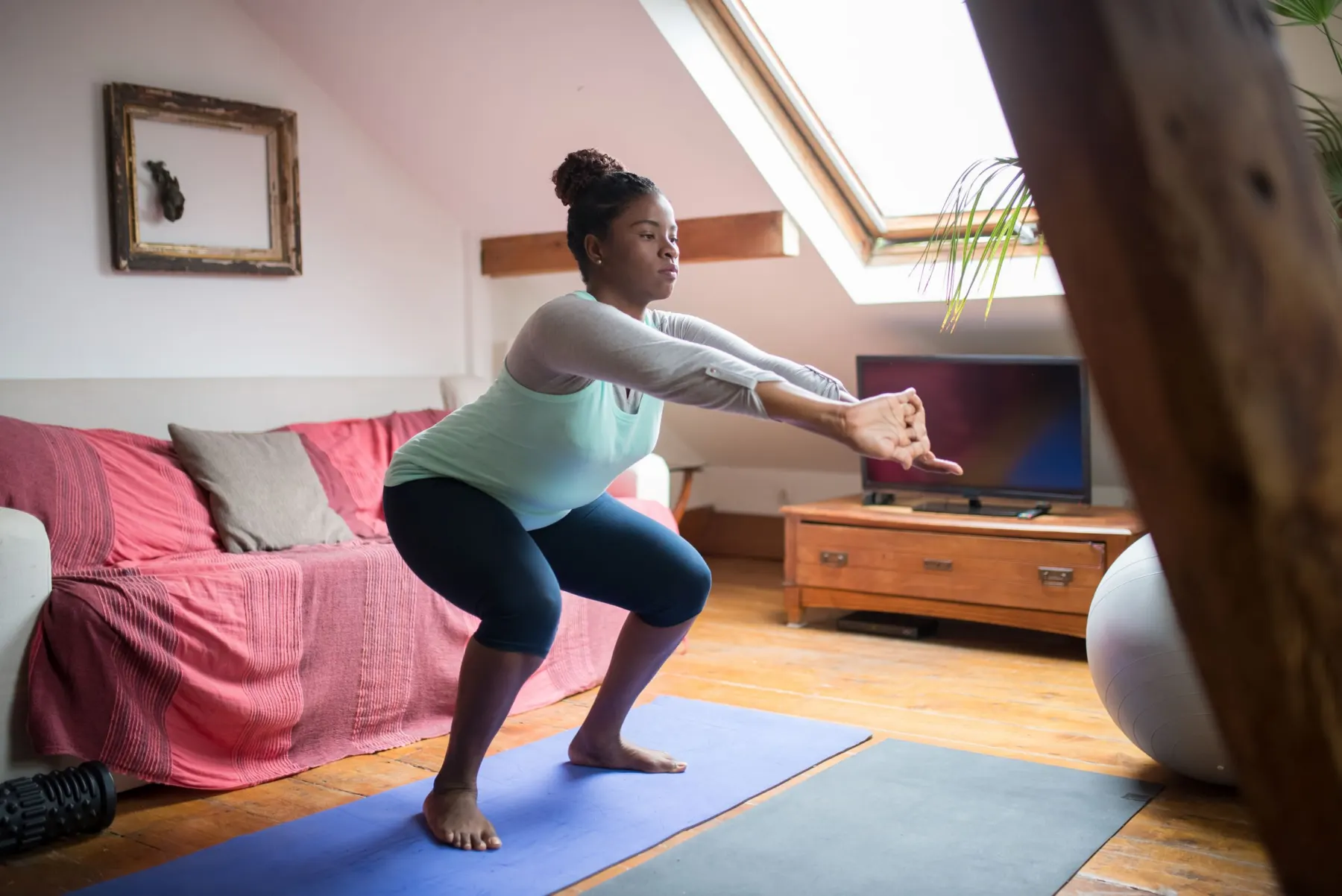
- Chair-and-wall strength. Its home strength set includes sit-to-stand, mini-squats, calf raises, sideways leg lifts, leg extensions, wall press-ups and biceps curls.
- Stairs. The US Centers for Disease Control and Prevention (CDC) lists stair climbing among activities that need no new skills.
- Dancing. The CDC also suggests dancing as an indoor option for days when the weather keeps you in. One song takes up the same floor as standing still.
- Housework done on purpose. The NHS counts vacuuming, dusting and making the bed as light activity, which is moving rather than sitting or lying down.
- Follow-along videos. Many are designed for a small rectangle of floor. Choose ones from a health service or another source you trust; our guide to finding reliable health information online explains what to look for.
Write two or three of these next to the spots you ticked. If you are unsure whether a particular exercise suits you, the NHS advice attached to its home routines is to check with a GP or a health professional involved in your care.
Part 3: Solve the practical problems
Noise and neighbours
If you live above someone, choose movements that keep your feet on the floor: marching, slow squats to a chair, wall work, seated routines. Save anything with jumping for outdoors.
Sharing the space
In a shared home the issue is often being watched, not being cramped. Options include agreeing a regular quarter of an hour when the room is yours, using your bedroom, or inviting the other person to join in. Short sessions help here. The UK Chief Medical Officers’ guidelines say that small bouts of activity, including those under ten minutes, add up over the day and week.
Storage
You may not need any equipment. If you do want some, think flat and small: a resistance band fits in a drawer, and water bottles are already in the kitchen. Before buying anything larger, borrow one or try it elsewhere for a few weeks.
Setting up and putting away
A routine that takes five minutes to set up will be skipped. Aim for a set-up of one move: pull out the chair, or clear the hooks. Keeping your chosen spot permanently free of clutter is worth more than any piece of kit.
Comfort
The NHS suggests loose, comfortable clothing and keeping some water to hand. Open a window if the room gets stuffy.
Part 4: Give it a time and start small
Pick one spot, one activity and one moment in the day that already exists: while something cooks, after you close the laptop, before the evening news. Our article on building a small habit explains why attaching a new action to an existing one works.
The NHS advice for its home exercises is to build up slowly and increase the number of repetitions gradually over time. It suggests doing them at least twice a week. If you want to understand where that figure comes from and how to judge effort, see getting started with strength activity.
And remember that the home does not have to carry everything. The corridor outside, the stairs in your building, the pavement and the nearest park are extensions of a small home. The worksheet is there to remove one excuse, not to keep you indoors.
Sources
- NHS (UK) Strength exercises
- NHS (UK) Sitting exercises
- NHS (UK) Get active - Better Health
- Centers for Disease Control and Prevention (US) Overcoming Barriers to Physical Activity
- NHS (UK) Physical activity guidelines for older adults
- UK Department of Health and Social Care (UK) UK Chief Medical Officers' physical activity guidelines
How this guide was prepared
Written by Meetis Editorial with AI assistance, using the sources listed above, and checked against them before publication. It has not been reviewed by a doctor or other health professional. It is general information, not personal medical advice — for questions about your own health, speak to a qualified professional.