Making Your Bedroom More Comfortable for Sleep
A ten-minute night-time walk-through of light, sound, temperature and bedding, with low-cost fixes for shared and rented rooms.
On this page
Key points
- Check the room at night, lying where you sleep, before changing anything.
- Public guidance says dark, quiet and cool, or "the right temperature"; the pages we read give no single figure.
- Change one thing at a time and give it a week.
Public health advice on the bedroom is short. The US National Heart, Lung, and Blood Institute (NHLBI) says to keep it quiet, cool and dark. Healthdirect in Australia says the right temperature, quiet and dark, with comfortable bedding. The NHS lists noise, a room that is too hot or too cold, and an uncomfortable bed among the common causes of trouble sleeping.
The hard part is turning three adjectives into changes in a real room, often a shared or rented one. This is a walk-through you can do in about ten minutes tonight, with a notebook, at the time you would normally go to bed.
Before you start
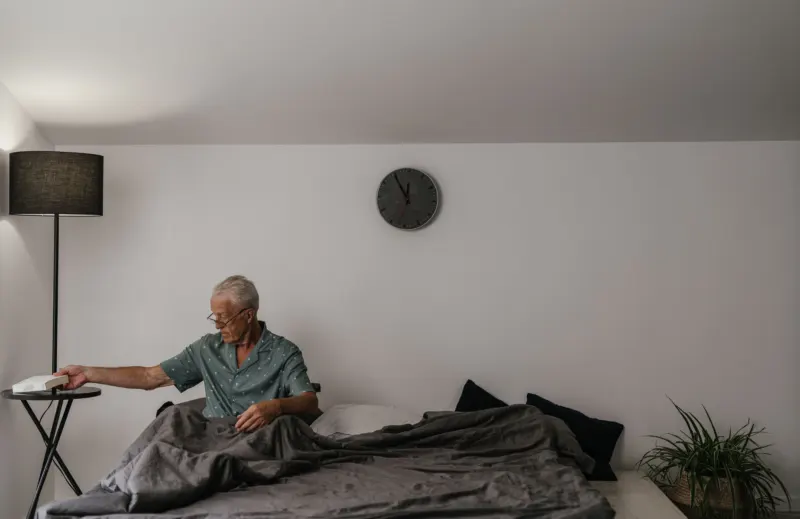
Do the check at night with the lights off, lying where you actually sleep. A room that seems dark and quiet at 4pm can be neither at midnight. Write down what you notice; do not fix anything yet.
Light
- Window. Is light coming round or through the curtains? NHS Every Mind Matters suggests closing curtains fully. The NHS insomnia advice mentions curtains, blinds or an eye mask. An eye mask is the cheapest fix and the only one that travels.
- Small lights. Count the standby lights, chargers and displays you can see from the pillow. The NHLBI names very bright alarm clocks, along with phones and televisions, as sources of evening light that can make it harder to fall asleep. A strip of opaque tape or turning a device to face the wall is enough.
- Phone. NHS Every Mind Matters suggests turning it face down.
- Clock. The same NHS page suggests hiding clocks. Healthdirect goes further and suggests taking the clock out of the bedroom if you can, because checking the time during the night can raise anxiety.
- If you need some light. The NHLBI says a dim night light is fine. Low and behind you is better than bright and in your eyeline.
Sound
- What can you turn off? Putting the phone on silent is one of the suggestions from NHS Every Mind Matters. Check for notification sounds on other devices in the room.
- What can you not control? Traffic, neighbours, a partner who snores, a fridge in a studio flat. NHS Every Mind Matters suggests earplugs, or background sounds such as rainfall, gentle music or white noise.
- Daytime sleepers. For people on shifts, healthdirect suggests asking others not to disturb you and using earplugs or white noise.
Temperature
None of the public health pages we read for this article gives a single bedroom temperature. The NHLBI says “cool”; healthdirect says “the right temperature”; NHS Every Mind Matters says a cool room may be easier to sleep in and suggests adjusting the temperature, or opening a window if it is safe to do so, to make the room cooler. That vagueness is honest. Climate, housing, bedding and bodies differ too much for one figure to suit everyone.
Questions that are more useful than a number:
- Do you wake up hot and throw the covers off, or wake up cold and curled up?
- Can you change the bedding more easily than the room? Layers you can add or remove in the night are cheaper than heating or cooling.
- If you share a bed, would separate covers solve a disagreement about warmth?
- Is it safe to open a window where you live, and does that trade heat for noise?
The bed itself
The NHS advice is simply to make sure your mattress, pillows and covers are comfortable. There is no official test for that, and a new mattress is a large purchase that guidance does not promise will help. Cheaper checks first:
- Do you sleep noticeably better or worse in other beds, such as at a friend’s home or in a hotel?
- Is the pillow the right height for how you lie? Try a folded towel on top or a thinner pillow for a week.
- Are the covers right for the season?
What the room is used for
Healthdirect advises using the bed for sleep, not for television, phone or computer use, so that your mind links bed with sleeping. It also suggests keeping work tools and laptops out of the bedroom.
In a one-room home that is not fully possible, but a version of it is:
- work at a table or on the sofa, not on the bed, even if they are two metres apart;
- close the laptop and put it in a bag or drawer when work ends, so it is out of sight from the pillow;
- use a different light for the evening than for work, such as a lamp instead of the ceiling light.
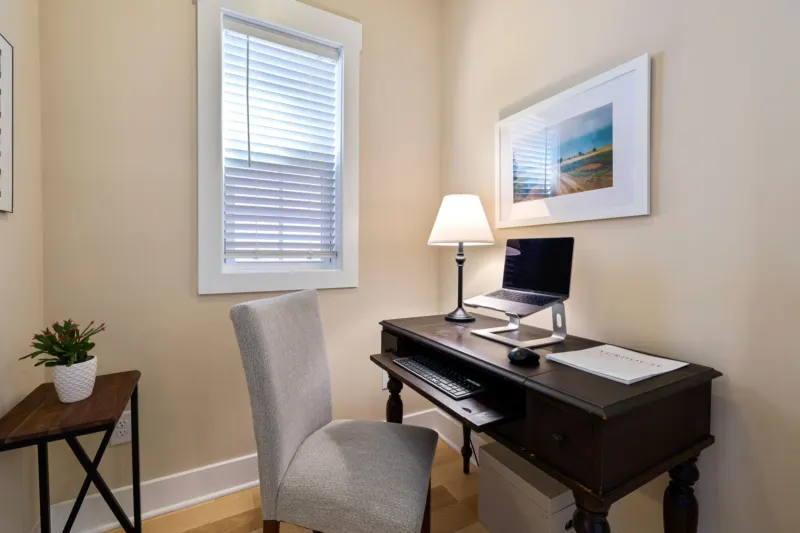
If you work from home, a more comfortable desk setup elsewhere in the room makes it easier to stay off the bed during the day.
Change one thing, then wait
It is tempting to change everything in one weekend. If you do, you will not know what helped. Pick the item that bothered you most during the check, change it, and give it a week. Short notes in a simple sleep diary will show whether nights with the change look any different.
A comfortable room removes obstacles. It is one part of the picture alongside what happens in the hour before you get into it, which is covered in building a bedtime routine that fits your life.
Sources
- National Heart, Lung, and Blood Institute (NIH) (US) Sleep Deprivation and Deficiency - Healthy Sleep Habits
- healthdirect (Australian Government) (Australia) Sleep - stages, tips, disorders, apnoea
- NHS (UK) Insomnia
- NHS (UK) How to fall asleep faster and sleep better
- National Heart, Lung, and Blood Institute (NIH) (US) How Sleep Works - Your Sleep/Wake Cycle
How this guide was prepared
Written by Meetis Editorial with AI assistance, using the sources listed above, and checked against them before publication. It has not been reviewed by a doctor or other health professional. It is general information, not personal medical advice — for questions about your own health, speak to a qualified professional.