What Sleep Trackers Can — and Cannot — Tell You
Consumer sleep trackers estimate sleep from movement and pulse. That makes them useful for trends and unsuitable for diagnosis.
On this page
Key points
- A tracker estimates sleep; a clinical sleep study measures brain activity, breathing and oxygen.
- The AASM says consumer sleep devices cannot diagnose or treat sleep disorders.
- Trends over weeks deserve more trust than one night's score or stage breakdown.
- If you feel unwell or very sleepy, a good score is not a reason to skip an appointment.
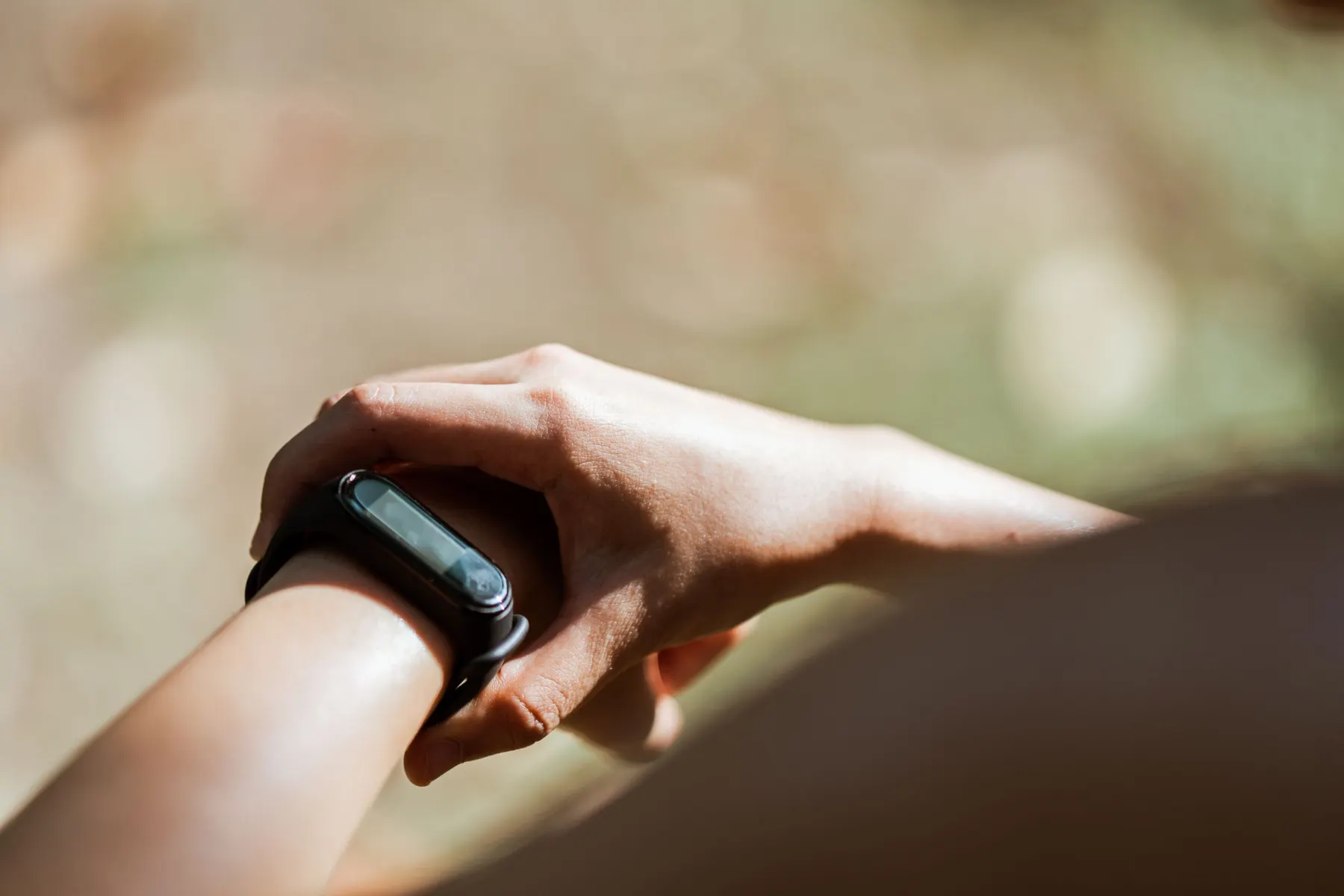
A watch, ring or phone app that scores your sleep each morning is doing something specific: it collects signals such as movement and pulse, runs them through the manufacturer’s software, and presents an estimate. That estimate can be useful. It is not the same thing as a medical measurement of sleep, and knowing the difference tells you which numbers to lean on and which to hold loosely.
What a sleep study measures, and what a tracker measures
The clinical reference point is a sleep study. The US National Heart, Lung, and Blood Institute (NHLBI) explains that the most common type records brain waves, heart rate, breathing, blood oxygen levels and muscle movements through a full night, using sensors on the scalp, face, eyelids, chest, limbs and a finger. Sleep phases and stages are classified from the brain activity and eye movements.
Consumer devices work from less. A 2023 validation study in the journal JMIR mHealth and uHealth, which tested eleven consumer trackers, describes wrist and ring devices as relying on accelerometers, which sense movement, and on light-based pulse sensors. Bedside and under-mattress devices sense body movement and breathing; phone apps use the microphone or similar. None of these records brain activity. Sleep stages on a consumer device are therefore inferred, not observed.
What the professional body says
The American Academy of Sleep Medicine (AASM) set out its position in 2018. In summary: consumer sleep technologies had little validation data behind them, most were sold as lifestyle products outside the oversight of the US Food and Drug Administration, their raw data and algorithms were generally not available to clinicians, and they could not be used to diagnose or treat sleep disorders. The AASM also saw value in them: they can raise awareness of sleep and can improve the conversation between a patient and a clinician when used as part of a proper evaluation.
That statement is several years old and devices have changed since. Its core distinction still helps: a product is suitable for diagnosis only if it has been tested and cleared for that purpose.
Can and cannot
| Question | A tracker can | A tracker cannot |
|---|---|---|
| When did I sleep? | Give a consistent log of rough bed and wake times over weeks | Tell you exactly when you fell asleep on a given night |
| How long? | Estimate total sleep and show whether it is trending up or down | Guarantee the figure; one study found wearables tended to overestimate sleep |
| What stages? | Offer an inferred breakdown | Measure stages; that needs brain-activity sensors |
| Do I have a sleep disorder? | Prompt you to raise a concern | Diagnose or rule out insomnia, sleep apnoea or anything else |
| How do I feel? | Nothing; it does not know | Replace your own sense of being rested or not |
How good are the estimates?
It depends on the device, and the evidence is still limited. In the 2023 study mentioned above, 75 adults with sleep complaints wore consumer trackers during a night of laboratory sleep testing. Agreement with the laboratory results on sleep stages ranged from slight to moderate depending on the product, and accuracy varied widely even among devices of the same type. Wearables tended to overestimate sleep.
This is one study, in one country, in a laboratory and not at home, with a modest number of people per device, and several of its authors worked for, or held shares in, the company behind one of the apps tested. It should not be read as a ranking. What it does support is a cautious general point: treat stage breakdowns and precise minute counts as approximate, and do not assume two brands’ numbers are comparable.
Uses that play to a tracker’s strengths
- Trends over weeks. Whatever a device’s errors, the same device on the same person is likely to err in similar ways from night to night. A month-long drift in bedtime is more believable than last night’s score.
- Regularity. A chart of when you went to bed and got up across a month shows at a glance how regular your schedule is, which is something sleep guidance does ask for.
- Before-and-after checks. If you change one habit, a tracker gives a rough second opinion alongside your own notes.
- A prompt for a conversation. The AASM gives the example that tracking sleep time or snoring may point to a concern worth evaluating.
Uses that ask too much of it
- Judging a single night. A low score after a night you felt fine about is weak evidence that something was wrong.
- Chasing a stage target. The stage figures are inferred, and deep sleep naturally declines with age, according to the NHLBI.
- Reassurance against symptoms. The AASM’s 2018 public statement is direct on this: people who are dissatisfied with their sleep, have an ongoing sleep problem or have excessive daytime sleepiness should talk to a licensed medical provider whatever their device reports. A good score does not cancel out how you feel.
- Self-diagnosis. An app’s alert is a reason to ask, not an answer. The same logic applies to formal screening, as explained in what a screening test can and cannot tell you.
Pairing a tracker with a diary
A device has no idea about the coffee at 5pm, the argument at 9pm or the fact that you felt fine. A simple sleep diary captures exactly that context. Used together for two weeks, the diary explains what the tracker only counts.
Taking tracker data to an appointment
The AASM position is that device data may help the conversation but should be considered within a full sleep evaluation and should not replace validated diagnostic tools. In practice that means a clinician may glance at it and then ask their own questions, or arrange tests. The NHLBI notes that doctors have their own versions of activity monitoring: a small wrist motion sensor worn for 3 to 14 days is one of the tests that may be used.
Preparing to talk to a clinician about ongoing sleep problems covers the rest of that visit.
Sources
- National Heart, Lung, and Blood Institute (NIH) (US) Sleep Studies
- National Heart, Lung, and Blood Institute (NIH) (US) How Sleep Works - Sleep Phases and Stages
- JMIR mHealth and uHealth (2023) (International (study conducted in South Korea)) Accuracy of 11 Wearable, Nearable, and Airable Consumer Sleep Trackers: Prospective Multicenter Validation Study
- American Academy of Sleep Medicine (Journal of Clinical Sleep Medicine, 2018) (US) Consumer Sleep Technology: An American Academy of Sleep Medicine Position Statement
- American Academy of Sleep Medicine (US) Consumer sleep technology is no substitute for medical evaluation
- National Heart, Lung, and Blood Institute (NIH) (US) Insomnia - Diagnosis
How this guide was prepared
Written by Meetis Editorial with AI assistance, using the sources listed above, and checked against them before publication. It has not been reviewed by a doctor or other health professional. It is general information, not personal medical advice — for questions about your own health, speak to a qualified professional.