How to Check a Nutrition Claim Before You Share It
Seven questions that take about two minutes, a short list of warning signs, and why a claim on a food pack is not the same as a claim in a post.

On this page
A friend sends a post: one food “fights inflammation”, another “is as harmful as smoking”. Sharing takes a second. Checking takes about two minutes, and most claims either pass or collapse within the first three questions below.
The checklist draws on a list of questions published by the US National Center for Complementary and Integrative Health (NCCIH), part of the National Institutes of Health, for reading health news stories. That list was written with complementary health approaches in mind; the questions apply just as well to claims about food.
The seven questions
1. What exactly is being claimed?
Put the claim into one plain sentence: eating X leads to Y in people like me. Many posts fall apart at this stage, because words such as “supports”, “boosts” or “linked to” do not say what is supposed to happen, to whom, or by how much. If you cannot state the claim, there is nothing to check and nothing worth passing on.
2. Is there a study behind it, and can you find it?
Look for a named journal, a named institution or a link. Research in scientific journals normally goes through peer review, in which other researchers in the field examine the work before it is published. Sense about Science, a UK charity, publishes a guide for the public, I don’t know what to believe, on how scientists present and judge research through that process. Peer review is a sign of scrutiny, not proof that the result is right. But a claim with no traceable source has not even reached that first step.
3. Was it tested in people?
The NCCIH’s first question is whether the research involved humans. Findings from animals or cells in a laboratory, it says, may not be immediately meaningful to your health until studies in people look at them. A great many striking food headlines begin with mice or a dish of cells.
4. How many people, for how long, and were they like you?
Three of the NCCIH questions belong together. Small studies give weaker results. A short study may miss effects that take months or years to appear. And the participants may differ from you in age, sex or other ways that matter. A two-week study of twenty young athletes says little about a sixty-year-old with a desk job.
5. How big was the difference?
The NCCIH points out that a small difference between two groups may interest scientists while meaning little for a person’s health or quality of life. Ask what was measured and how much it moved. If the post gives only a percentage, such as “40% lower risk”, you need to know: 40% of what? Our explainer on relative and absolute risk shows why that matters.
6. Is this the first report, or one of many?
“One study rarely proves anything,” the NCCIH says. This is where established guidance is useful. Advice from public bodies is generally built on many studies weighed together, so if a new claim contradicts it, the sensible reading is “interesting, unconfirmed”, not “everything we knew was wrong”.
7. Who paid, and who gains if you believe it?
The NCCIH advises caution when the funder of a study could profit from its results. The same goes for the person sharing it. A post that ends with a discount code or a product link is an advertisement.
Warning signs that need no research
Some features should slow you down straight away. The NCCIH’s Know the Science materials name three sources of misinformation: anecdotes presented as evidence, excessive claims made by supplement manufacturers, and television doctors promoting the latest “miracle cure”. It also reminds readers that “natural” does not necessarily mean safer or better.
To those, add the tone of the message itself. Claims that sort foods into heroes and villains, or that tell you to feel guilty or frightened, are built to be shared. Eating patterns are judged over weeks and across many foods, and single-food verdicts rarely survive that view.
A claim on a pack is a different thing
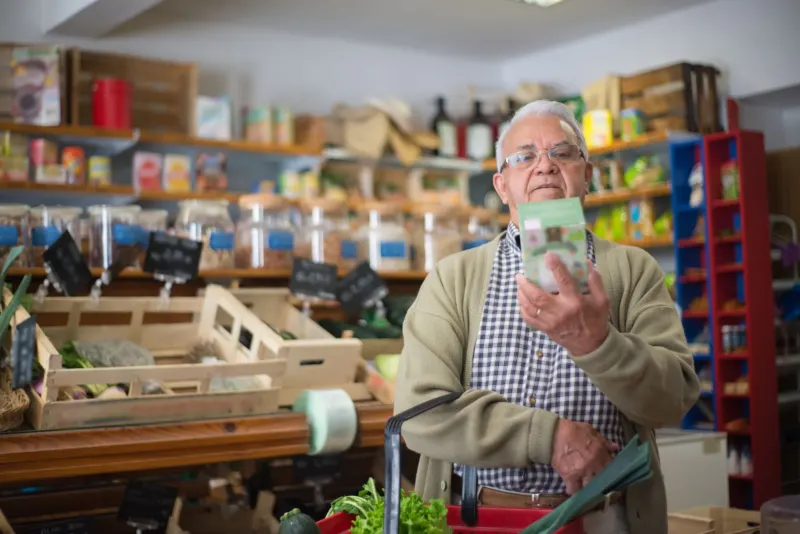
Wording on packaging is regulated, and the rules depend on where the product is sold. In the European Union, for example, the European Food Safety Authority (EFSA) distinguishes two types. A nutrition claim says a food has a particular nutritional property, such as “low fat” or “high in fibre”. A health claim says a food or one of its components brings a health benefit. EFSA assesses the scientific evidence for health claims, and the European Commission and member states then decide whether to authorise them, with the aim that claims on EU labels are clear and backed by evidence.
A social media post has no such filter. And an authorised claim on a pack still only tells you about one property of one product; the nutrition panel tells you the rest. See reading food labels for how to use it.
Before you press share
- Can I state the claim in one clear sentence?
- Have I seen the original source, not just a screenshot?
- Was it studied in people, in more than one study?
- Would I be comfortable if the person I send it to changed what they eat because of it?
The last question matters most. For someone with diabetes, a food allergy, kidney disease or an eating disorder, or who is pregnant, a confident-sounding food rule may simply not be safe to follow. If you are unsure, the kind option is not to send it, or to send it with “I don’t know if this is true”.
If a claim has made you think about changing your own diet in a significant way, especially if you have a medical condition or take regular medicines, raise it with a doctor, pharmacist or registered dietitian first. The NCCIH gives the same advice about complementary health approaches featured in the news: talk to your health care providers before you try one. For the next step in checking sources, see finding reliable health information online and how to read a health news headline more carefully.
Sources
- National Center for Complementary and Integrative Health (NIH) (US) Checklist for Understanding Health News Stories
- National Center for Complementary and Integrative Health (NIH) (US) Know the Science
- Sense about Science (UK) I don't know what to believe
- European Food Safety Authority (EU) Health claims
How this guide was prepared
Written by Meetis Editorial with AI assistance, using the sources listed above, and checked against them before publication. It has not been reviewed by a doctor or other health professional. It is general information, not personal medical advice — for questions about your own health, speak to a qualified professional.